


This is the second essay in an ongoing series on perinatal health and strength. If you’re new here, start with Motherhood is Not a Decline. It’s an Upgrade.
In 1967, Jock Semple tried to physically drag Kathrine Switzer off the Boston Marathon course mid-race.
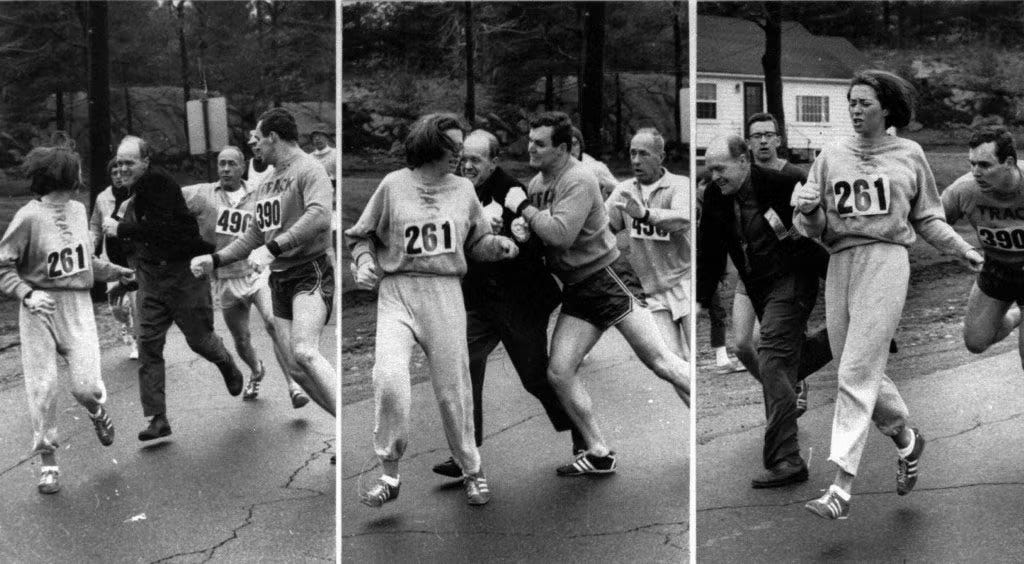
His reasoning, in her words: marathon running was “dangerous, de-sexing and de-feminising” for women. Common anxieties of the era included uterine displacement, infertility, and fragile health–and that was for women who weren’t pregnant.
The medical establishment genuinely didn’t think women could handle covering 26.2 miles on foot.
Fast forward to 2024. Eight-time CrossFit Games champion Tia-Clair Toomey-Orr gives birth to her daughter Willow and returns to competition less than a year later to win back-to-back competition titles. Just two months ago, Army Special Forces veteran Amanda Kimiko ran a 3:57 full marathon at 31 weeks pregnant.
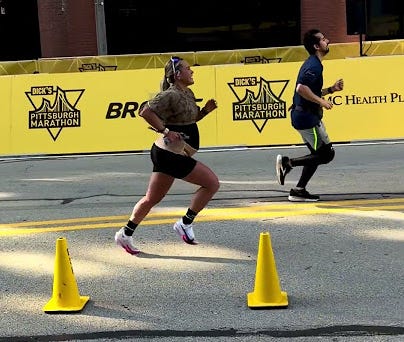
The cat is out of the bag. Pregnancy is not a time of fragility. It never was.
The women who understand that and train accordingly are having easier pregnancies, safer labours, and smoother postpartum recoveries. The women who get told to rest, shrink, and wait are struggling more with preventable pain, metabolic dysfunction, and depression.
So why is the “rest and take it easy” message still the default?
Why are healthy, active pregnant women still being warned to do less at the exact moment their bodies are capable of much more?
Let’s stop to consider that pregnancy can be a performance phase.
Pregnant physiology is not a liability. It is a live experiment in human adaptation with generations of documented evidence literally walking among us.
Start with the cardiovascular system. Cardiac output increases by up to 50% from pre-pregnancy levels, meaning that existing in a pregnant body is the metabolic equivalent of training for an endurance event around the clock. Every hour of every day. The heart is working harder, the blood volume is expanding, the lungs are adapting. The system is not shutting down. It is running at max.
What this means practically: pregnant women who train in this window reach the same training stimulus at a lower absolute workload. You run slower, but your body gets just as fit. You lift a lighter bar, and your cardiovascular system is still working at capacity. Think of it as compound interest on your fitness. Every session in pregnancy is depositing into a VO2 max account that pays out like a jackpot after delivery.
Now, muscle. My main event.
It is widely (and incorrectly) accepted that pregnancy is inherently catabolic. That previously athletic women should expect to lose muscle, get soft, and quietly absorb a physical backslide that lasts for months.
The research disagrees.
We have known for years that muscle gain in pregnancy is possible, that children of mothers who weight train are already born with greater muscle mass, and that heavy lifting (70-90 percent of one-rep max, if you’re looking for the numbers) is both safe and well-tolerated by mother and baby.
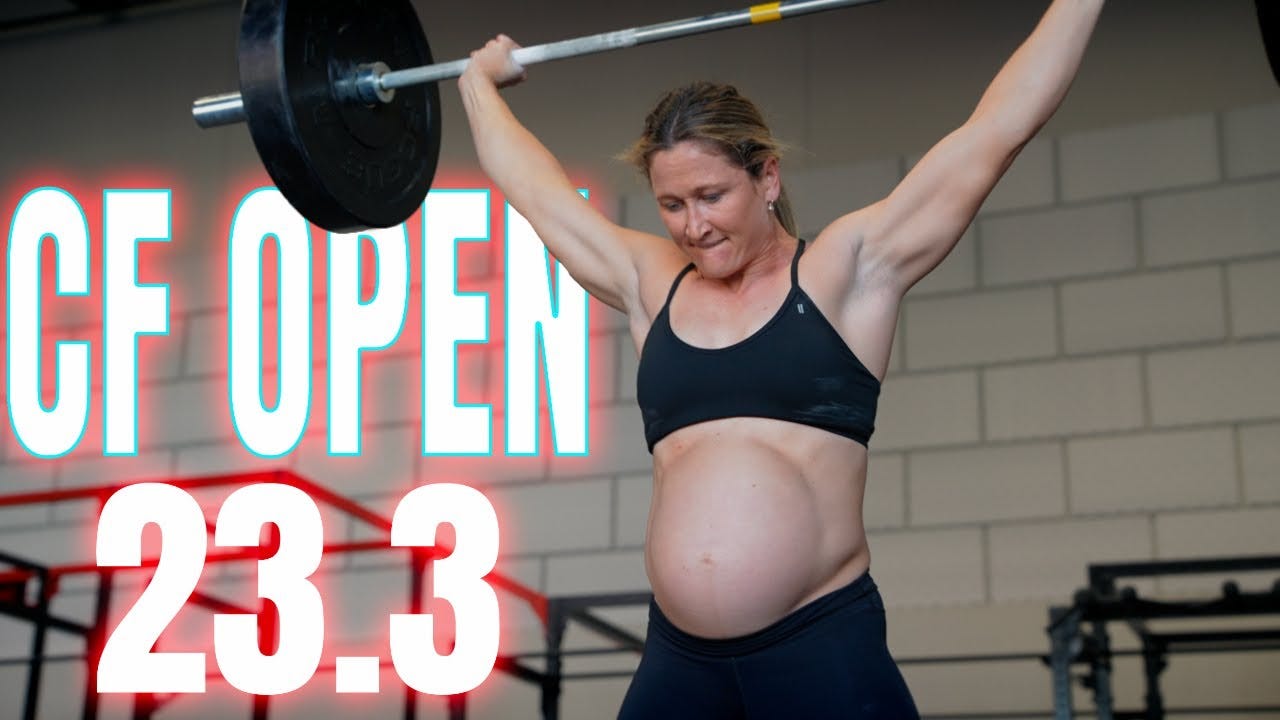
Women who strength train in pregnancy also have lower rates of preeclampsia, premature birth, instrument-assisted delivery, and postnatal mental health problems.
This is not fringe science or speculation. This is the literature we have now, ready to inform better practice now.
And then there is gestational diabetes mellitus (GDM), every clinician’s least favourite prenatal conversation, and still one of the most misunderstood. The 40 weeks of pregnancy produce a state of progressive insulin resistance, which is a physiological design feature that prioritises glucose delivery to the baby.
But without adequate physical activity driving glucose into skeletal muscle, and without adequate muscle mass to store it, that insulin resistance tips from adaptation into dysfunction. The path to gestational diabetes becomes the road more travelled by, for sedentary or undermuscled moms.
What makes this worse is the narrative that GDM simply “resolves” after delivery. That’s a dangerous oversimplification. Any diabetes diagnosis is a metabolic signal and a harbinger of future disease, not a pregnancy quirk. Treating it as temporary crowds out the actual long-term solution: building and maintaining muscle, in pregnancy and well beyond.
We know now: biology is not the problem. In fact, biology is the opportunity. What has failed women is not their bodies, but the guidance they were given about how to use them.
So if the evidence is this clear, and the solution this obvious: why isn’t every OB, midwife, and antenatal educator leading with it?
Because pregnancy and postpartum exercise have a serious PR problem.
And because the control and constraint of women’s bodies happens to serve the status quo quite well, few have stepped up to fix it.
When women are systematically told–by popular media, by outdated clinical guidance, by well-meaning family members–that they are in danger, or infirm, or disadvantaged by pregnancy, they internalise it. They don’t necessarily question it.
And too often, they then act in ways that confirm what they’ve been misled to believe.
Strength sounds dangerous, and motherhood is supposed to be soft. Muscles read as power, and the pregnant body is something to be protected. Resistance training looks like an advance, and pregnant women have been conditioned to retreat.
And empowering a pregnant woman to leverage her full cardiometabolic and strength potential is transformative in ways that go far beyond the gym.
Giving women full autonomy over their bodies is radical in almost any context. Doing it in spaces that are historically male-coded, like competitive sport, strength training, and high-performance fitness, is revolutionary. And repurposing the very systems that once served to control and limit women’s bodies to instead amplify their capacity?
That is confrontational. And that is precisely where our work begins.
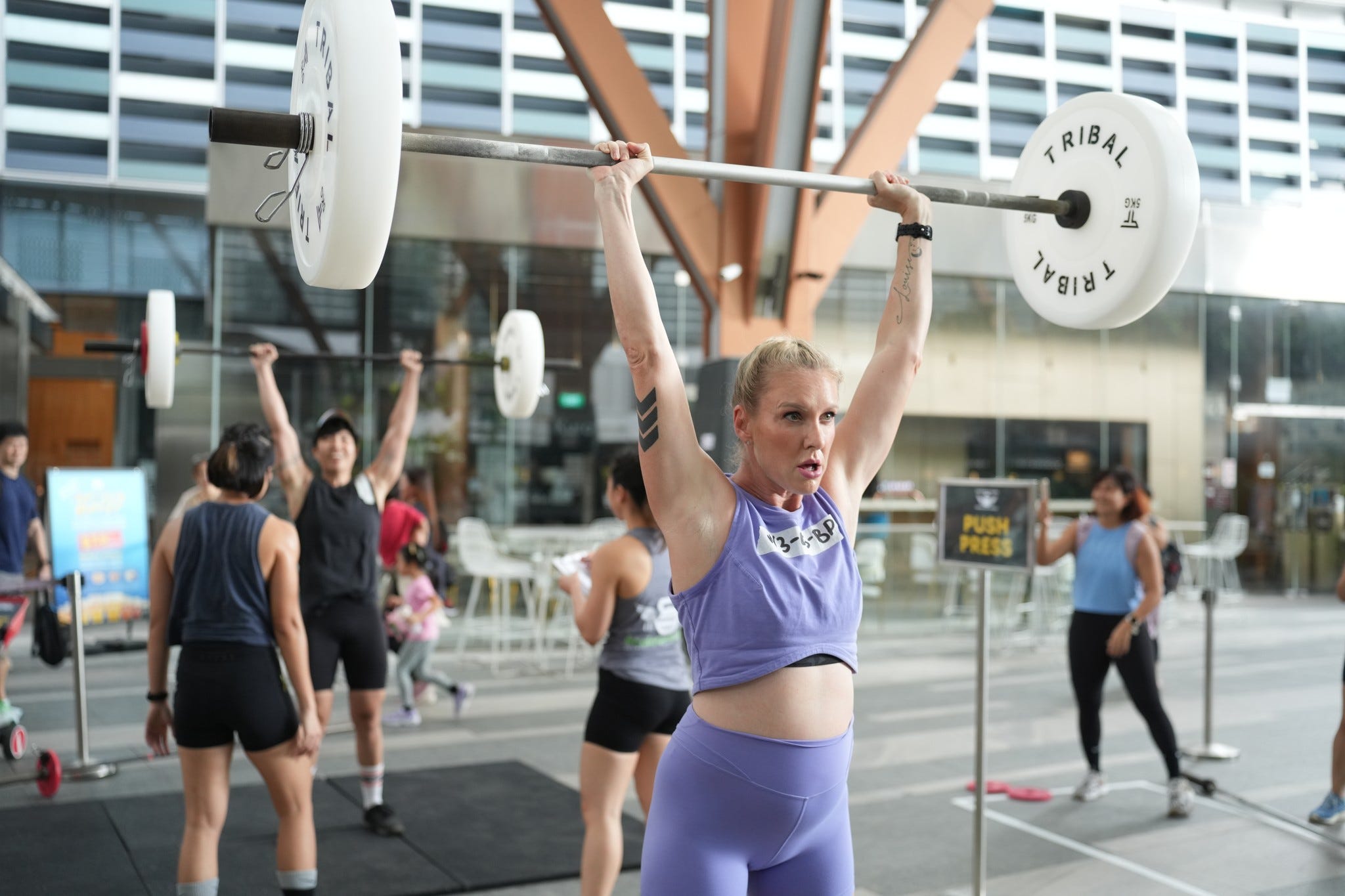
In my experience, the gap between what the evidence supports and what women are actually being told was most visible in two places: antenatal classes and doctors’ consulting rooms.
In my own antenatal class that spanned five full-day sessions, the topic of exercise came up once. A single PowerPoint slide with two bullet points: walking and yoga. Meanwhile, we spent over an hour learning to tighten the corners on a square-shaped swaddle blanket.
I often think about the women in that room. Educated, motivated, paying attention.
Leaving with meticulous swaddling technique and zero actionable knowledge about their own physiology. No discussion of strength training. No mention of protein requirements. Nothing about how the decisions they made over the next nine months would compound, for better and for worse, over the next several decades of their lives.
And the gap runs much deeper than just antenatal classes.
OBGYNs with undertrained patients routinely prescribe extended bed rest, caution against heavy lifting, and advise women to “wait until after the baby” before resuming any vigorous exercise they were doing before.
These women are left without proper allied health referrals, without programming, and without a plan. Add to this some of the more traditional midwives and doulas who, despite being the most experienced voices in the room, might still communicate exercise as optional rather than essential.
Where the gap feels most urgent, to me, is in the prevention of postnatal depression and anxiety at scale. Hours spent proffering the nitty-gritties of blanket-swaddling to moms when one in five of them will face serious postpartum mental health struggles is tone-deaf at best; downright insidious at worst.
And we know by now that the first-line treatment for postpartum anxiety and depression is exercise. It’s even been researched and quantified: the rough equivalent of 3,000 steps a day in early postpartum is enough to meaningfully reduce symptoms that peak around 14 days after delivery.
Yet the popularisation of dangerous social media messaging like the “5-5-5 Rule,” which advocates for 5 days in bed, 5 days on the bed, and 5 days around the bed, threatens to slam shut that early window for prevention and may worsen outcomes for women predisposed to mental health challenges.
What we owe women in pregnancy is not an excess of caution. It is precision, delivered with evidence-led authority.
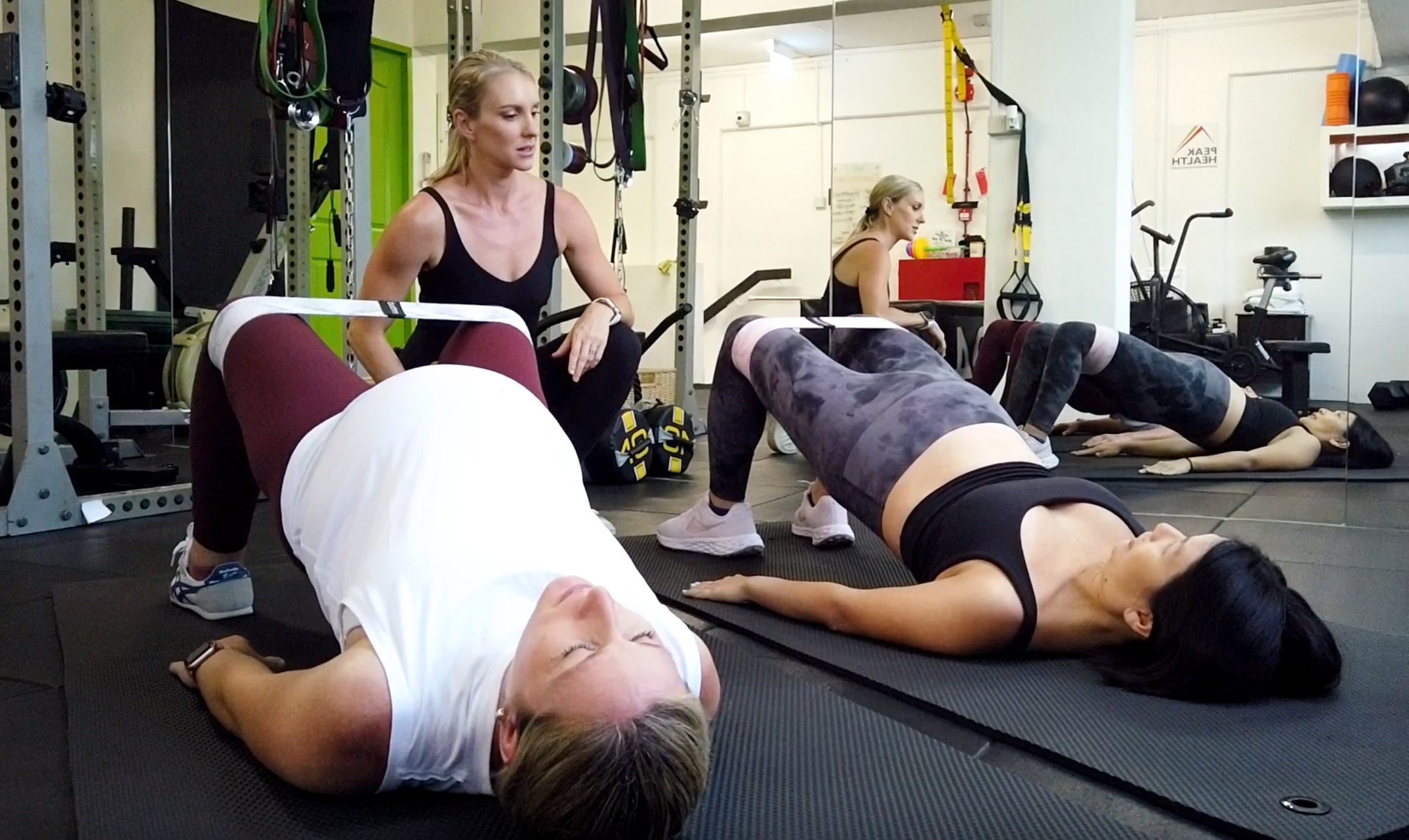
Pregnancy is a high-demand physical event, one played out at incredible scale with 132 million live births per year. It is the kind that requires an actual village–medicine, mental health, exercise, nutrition–working together around a woman who deserves more than a single slide and a swaddle demo.
So here is what I want you to take from this:
Your pregnant body is not in danger. It is experiencing its maximum performance.
And the difference between those two framings determines almost everything about how you will move through pregnancy, recover from it, and emerge on the other side.
The women I see in my clinic who approached pregnancy with a focus on strength and capacity, who trained, ate with intention, asked hard questions of their care teams, and refused to “take it easy,” do not just recover faster.
They feel more capable, more like themselves, and often stronger than they were before they ever became mothers.
That story is not luck. It is not genetics. It is the result of treating the most metabolically responsive window of a woman’s life as the opportunity it actually is.
You are not in a time-out. You are in training.
Your inputs on movement and nutrition will land harder and build further than they would outside of this window. That is leverage. And when women are given the guidance to use that leverage to improve our own outcomes, we finally have the tools to initiate generational change.
The system has not caught up to our biology. But we don’t have to wait for the system.
The new era of maternal strength starts now.
Next up: my take on the fear economy of pregnancy, and the hidden costs of telling mothers to be careful.
Oh my gosh. I didn't know those stats around early movement and lower depression rates. Thank you!!!
Yayy this is sooo empowering. For many women to know that there is a secondary opportunity to maximise our health and it’s hidden in the very area they least expect it